One Sleepless Night
WITH: Assembyl · 5050 Skatepark · YouthBuild Staten Island · Makerspace NYC · Community volunteers
Turning a personal emergency into a community-powered PPE production network
“I could not do anything for Brycen from outside the hospital. But I had a shop full of machines sitting idle.”
- Brief
- Free face shields for healthcare workers and first responders during the shortage
- Constraint
- No client, no purchase order, no supply chain. Materials vanishing by the hour
- The move
- Split printing from assembly across two sites, and built PPV.NYC to route it
- Result
- 5,000+ shields delivered free across all five boroughs
Section 01
March 2020
I was finishing the Monsters installation for its expo debut and getting ready to fly to an industry conference. COVID was everywhere in the news. Across the maker community, people like Josef Prusa's team were openly sharing designs for printed face shields.
Then New York stopped. Nonessential businesses were ordered closed. The expo and the conference disappeared, and everything on my production schedule stopped mattering.
The next day I got a message: my five-year-old son, Brycen, was being taken to the hospital because he could not breathe. Doctors rushed him into intensive care, but only after confirming a bed was available. Visitation rules allowed one parent in with him, so I waited outside. A COVID test was arranged, results due the next day. Nobody knew what was wrong yet. With COVID spreading and my son struggling to breathe, I could not imagine what else it could be.
Section 02
One sleepless night
That night I did not sleep. I kept coming back to one detail: a bed had been available when my son needed it. What happened when more families showed up? What if the beds filled? What if the people treating them ran out of protective equipment and got sick themselves?
I could not do anything for Brycen from outside the hospital. But my work had stopped, and I had a shop full of machines sitting idle. So I decided to use them.
Section 03
Before there was a plan
I launched a GoFundMe, posted a production plan, and started calling community leaders who had equipment, space, funding, relationships, or just the willingness to help. The goal was simple: make protective equipment locally and give it away free to the people who needed it. There was no supply chain and no time to wait for one. We had to build the system while it was running.
The shield design came from the open-source work the Prusa community was sharing. My job was not inventing another shield. It was everything around it.
- 01Source filament, sheet and packaging
- 02Adapt the design to what we could actually get
- 03Configure 60 printers for a continuous run
- 04Split fabrication from assembly
- 05Make the workflow repeatable across sites
- 06Recruit and coordinate volunteers
- 07Collect and prioritize incoming requests
- 08Organize pickup and delivery
- 09Raise output without losing control of it
The shield was one component. The real project was the system that got it made and into someone's hands.
Section 04
The partnership
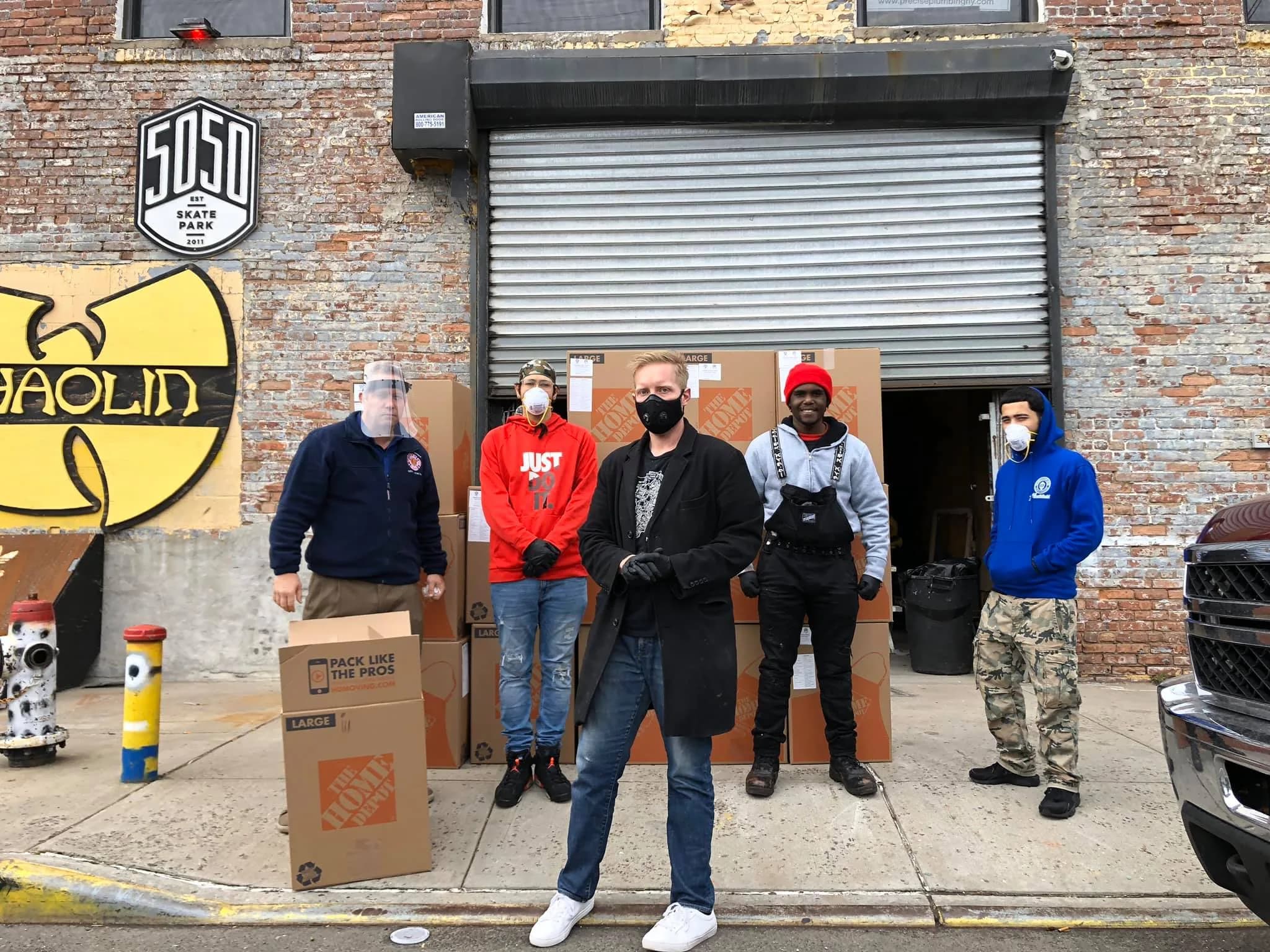
Makerspace NYC was one of my first calls. They helped where they could, though they were already CNC-cutting shields under a city EDC initiative. My next call was Ed Pollio. Ed worked in commercial production for clients like Red Bull, and he and his wife had built 5050 Skatepark, the only indoor skatepark in New York City, on the belief that kids deserved a safe second home. Ed needed no convincing. We started organizing that day.
The original post reached Kamillah Hanks, who I knew through Staten Island's civic community. The shutdown had frozen her YouthBuild Staten Island program: funding was already allocated to employ the participants, but they could not work or even attend their graduation. Kamillah proposed joining forces. Her people got paid emergency work, and the operation got a workforce, her relationships, and her ability to unlock resources.
What started as one person's response was becoming a community production network.
Section 05
A distributed factory
I built PPV.NYC as the public face of the effort. Hospitals, first responders and healthcare workers could request PPE. Everyone else could offer time, transportation, equipment, materials or money. Dozens responded, and a core group of nine joined the hands-on production operation.
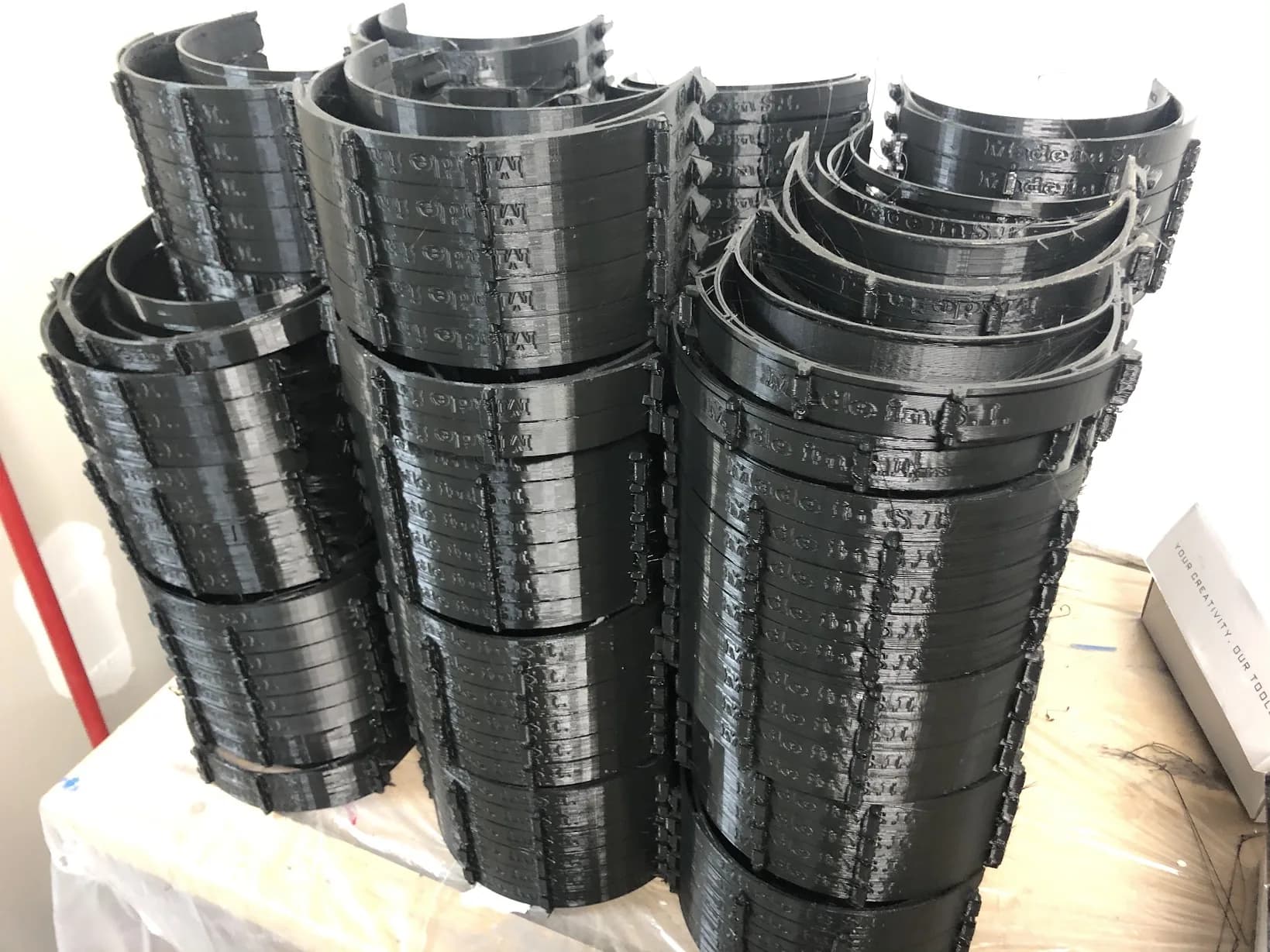
The workflow split between locations. At Assembyl, 60 printers ran continuously producing headbands. Those moved to 5050 Skatepark, where six assembly stations of YouthBuild participants and volunteers installed the clear shields, inspected the finished units and staged them for distribution. Separating printing from assembly let each site do one thing well.
Print→Transport→Assemble→Inspect→Package→Distribute
We also laser-cut ear savers to take the strain of mask straps off people wearing them all day, and prototyped molds to push production past what printers alone could do. Every stage was a production problem.
Raise output·Simplify assembly·Standardize parts·Kill bottlenecks·Cut handling·Keep materials moving
The printers made the immediate response possible, but machines alone could not have produced the outcome. It depended just as much on young workers, organizers, volunteers, donors and drivers.
Section 06
Where it landed
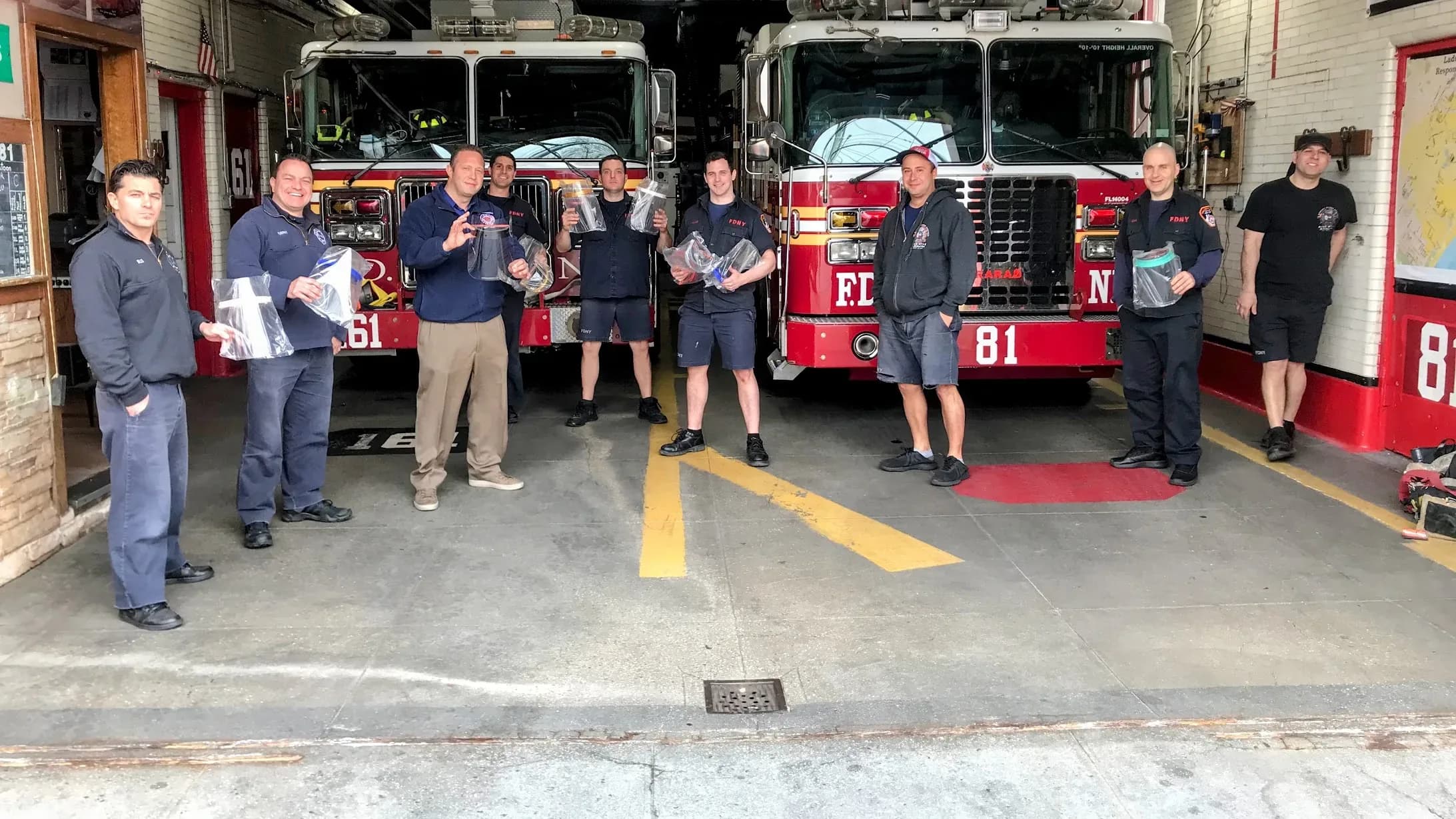
Anyone requesting shields could arrange pickup or delivery, and volunteers drove finished equipment to all five boroughs. Through Kamillah's connection with the FDNY commissioner, we supplied all 19 firehouses on Staten Island.
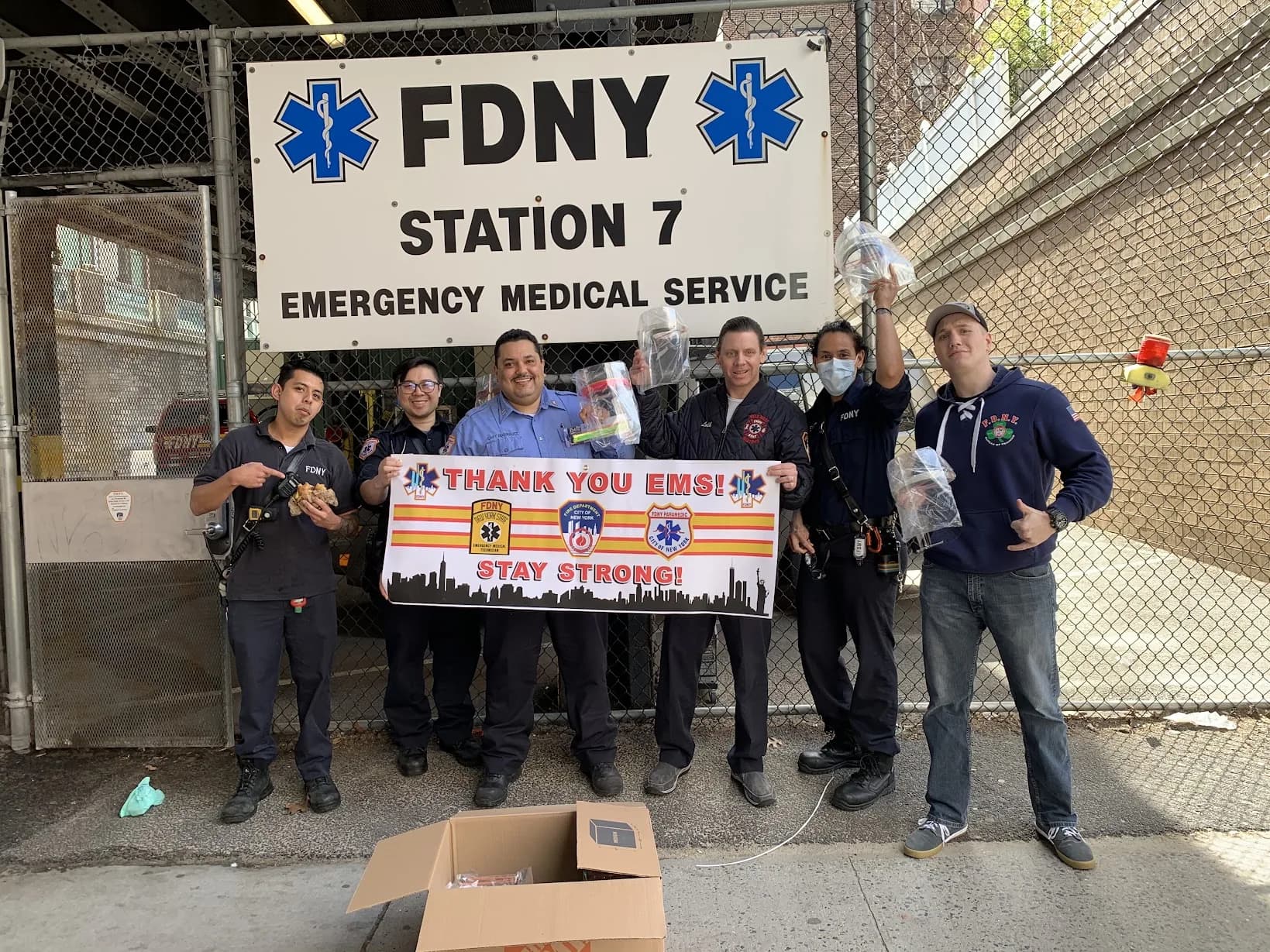
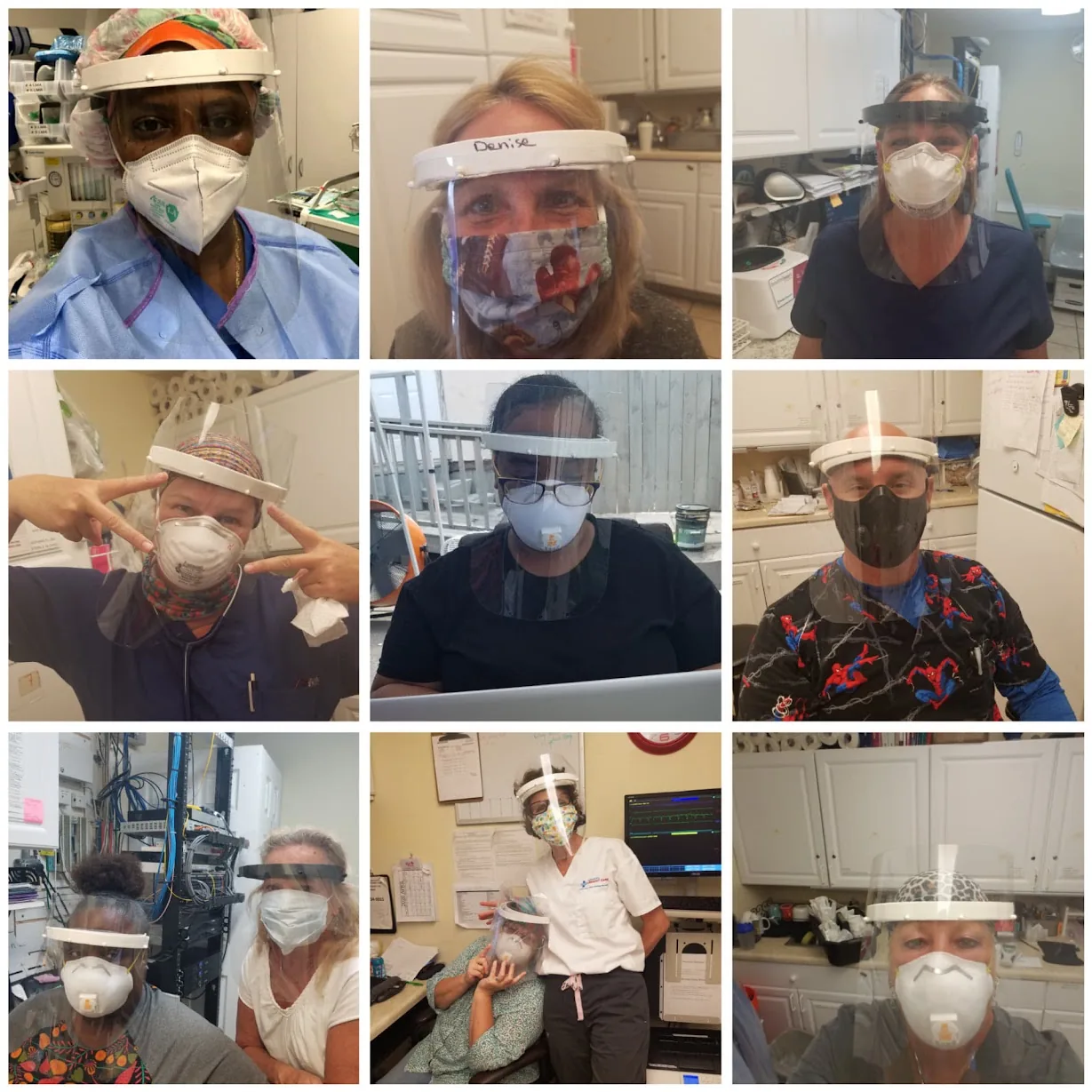
Photos started coming back from hospitals and firehouses showing the shields being worn in the rooms they were made for. These were not prototypes waiting for validation. They were in use during an active emergency.
Section 07
Showing people what they could do
Videographer Matt Chirico volunteered to document the effort. His film shows young workers, organizers, makers, drivers and donors each contributing whatever they had.
That became the message. It was not a record of what we had done. It was an invitation to look at your own skills, equipment and relationships and notice that you might already have something the emergency needed.
Section 08
What rapid manufacturing is for
3D printing was never going to solve a global PPE shortage. Its value was speed. It let small, adaptable production start working before conventional supply chains recovered, before tooling could be commissioned, and while larger manufacturers were still reorganizing.
I was not making an object. I was organizing machines, materials, money, labor, information and distribution around an urgent outcome. That is most of what I have done since.
Brycen's test came back negative. After several days his oxygen recovered and he came home. He is eleven now, and healthy.
The fear that started this was personal. The response was collective.
Role
Initiator and project lead · Emergency-manufacturing strategy · Fundraising · Community outreach · Partnership development · PPV.NYC request-and-volunteer platform · 3D-print production · Laser cutting · Mold prototyping · Workflow design · Volunteer coordination · Fulfillment planning · Public communications
- 01 March 2020
- 02 One sleepless night
- 03 Before there was a plan
- 04 The partnership
- 05 A distributed factory
- 06 Where it landed
- 07 Showing people what they could do
- 08 What rapid manufacturing is for
no script — monitor follows chapters
Need something like this built?
Get in touch →